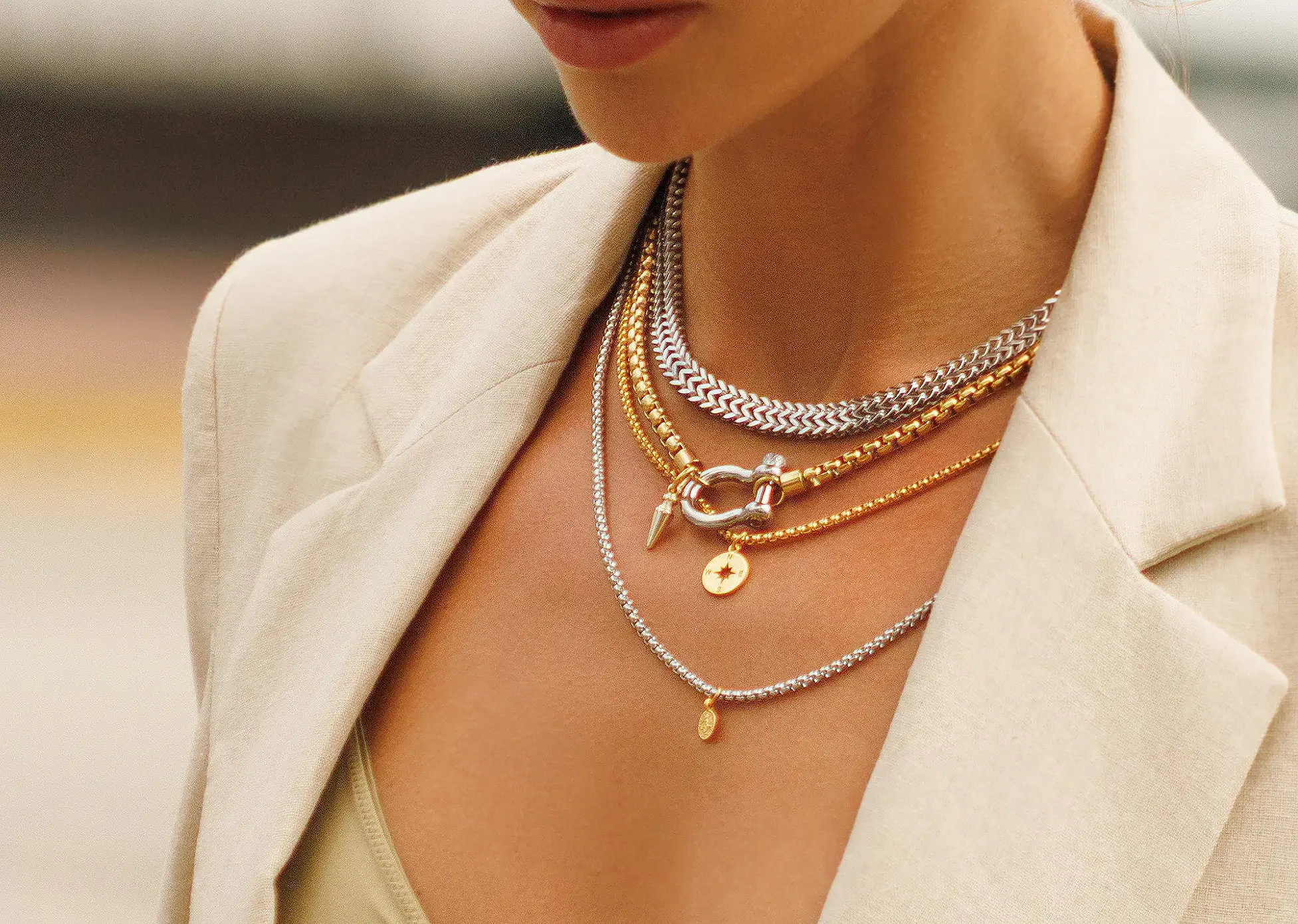
The difference between a basic outfit and a highly photographed street-style look often comes down to the details. While clothing sets the foundation, jewelry provides the personality. In recent seasons, the art of jewelry styling has evolved past the concept of wearing a single statement piece. Today, fashion influencers dominate the visual landscape by masterfully layering necklaces, stacking rings, and curating ear parties that look effortlessly thrown together yet perfectly balanced.
Mastering this art form requires a shift in how you view your personal collection. It is no longer about matching your metals perfectly or keeping your delicate pieces separate from your chunky hardware. Instead, modern jewelry styling relies on understanding visual weight, proportion, texture, and spacing. By learning the foundational principles of layering and stacking, you can breathe new life into items you already own and curate a signature look that feels uniquely yours.
The Core Principles of Successful Stacking
Before diving into specific body parts, it is essential to understand the overarching rules that govern high-end jewelry curation. The goal of a multi-piece stack is to create depth and movement without causing physical tangling or visual chaos.
The most critical element to master is the focal point. Every successful jewelry stack requires an anchor piece, which is the heaviest or most visually striking item in the arrangement. Once you establish your anchor, you build outward using medium and delicate pieces to frame it. This structure guides the eye smoothly across the look rather than overwhelming the viewer with too many competing elements.
Another foundational rule is the strategic distribution of weight. If you choose to wear a highly complex, five-piece necklace stack, you should opt for a more restrained approach on your wrists and ears. Spacing out your high-impact moments ensures your overall aesthetic remains sophisticated, edited, and chic.
The Art of the Neckline: Creating the Perfect Cascade
Layering necklaces is arguably the most challenging stacking technique because it involves managing varying lengths, chain styles, and pendants while preventing the dreaded mid-day knotting.
To create a flawless necklace cascade, aim for a minimum of three distinct layers, ensuring there is a clear gap of at least two inches between each piece.
-
The Top Layer: Start with a close-fitting piece, such as a delicate 14-inch chain or a structured metal choker. This establishes the highest boundary of your stack and frames the collarbone.
-
The Middle Layer: This is typically your anchor piece, sitting around 18 inches. A medium-weight paperclip chain, a textured herringbone flat chain, or a small coin pendant works beautifully here to add substance.
-
The Bottom Layer: Complete the cascade with a 22 or 24-inch chain featuring a vertical pendant, such as an elongated bar or a sculptural crystal. This final layer draws the eye downward, creating an elongating effect that complements plunging necklines or simple crewneck t-shirts.
Ring Stacking: Building Texture Across Your Hands
An influencer-approved ring stack looks organic, as if collected over a lifetime of travel and curation. The secret to avoiding a cluttered look is varying both the thickness of the bands and the placement of the rings across your fingers.
Instead of stacking rings uniformly at the base of every finger, embrace asymmetry. Choose one finger, typically the index or middle finger, to host your heaviest statement ring, such as a thick gold dome ring or a signet ring. On the adjacent fingers, scale down the visual weight significantly.
Utilize midi rings, which sit comfortably above the middle knuckle, to break up horizontal lines and introduce vertical interest. When selecting bands, mix textures freely. Pair a high-polish, smooth band directly next to a twisted rope design or a hammered metal finish. This contrast reflects light at different angles, making the stack look dynamic and dimensional.
The Curated Ear: Designing a Flawless Ear Party
With the rise of multiple ear piercings, curating an ear party has become a major fashion statement. The most successful ear stacks follow the cascade rule, which dictates that jewelry should graduate in size from the lowest point of the ear upward.
The Lobe Foundation
Your first lobe piercing should house your largest, heaviest earring. This is the place for chunky huggie hoops, dramatic drop earrings, or substantial statement studs. If this piece is too light, the rest of the ear stack will look top-heavy and unbalanced.
The Cartilage Transition
As you move up into second and third lobe piercings, transition into smaller, snugger huggie hoops or minimal flat-back studs. When you reach the cartilage, helix, or conch areas, stick to incredibly delicate, low-profile pieces. Tiny diamond bezel studs, seamless hoops, or ear cuffs work best here, hugging the natural contours of your ear anatomy without competing with the lobe jewelry.
Breaking the Rules: Mastering Mixed Metals
The old-fashioned styling dictate that you must choose between gold or silver is officially obsolete. Influencers regularly mix metals to create an effortless, avant-garde appearance that looks highly contemporary.
To mix metals successfully without looking messy, use a deliberate ratio rather than a perfect 50-50 split. Aim for roughly 70 percent of one dominant metal, such as yellow gold, and interspersed 30 percent of the contrasting metal, like sterling silver or white gold.
The easiest way to ground a mixed-metal look is to include at least one pre-mixed piece within your stack. A single ring or necklace that inherently features both gold and silver links acts as a visual bridge, tying the rest of the disparate pieces together into a unified theme.
Curated Jewelry Styling Inspiration
To visualize how different chain textures, lengths, and metal weights harmonize to create a balanced, professional aesthetic, examine the curated styling example below.
Frequently Asked Questions
How do I prevent my layered necklaces from tangling throughout the day?
Necklaces tangle when chains of identical weights and styles rub against one another. To prevent this, always mix your chain profiles, pairing a flat herringbone or snakeskin chain with a rounded rope or cable chain. The different textures naturally slide past each other rather than catching. Additionally, you can utilize a specialized layered necklace detangler clasp, which secures multiple chains into a single barrel mechanism behind your neck.
Can I stack rings on fingers that have short or wide proportions?
Absolutely. If you want to elongate the appearance of your fingers, avoid thick, wide bands that cut across the finger horizontally. Instead, opt for thin, delicate bands and look for V-shaped or chevron-style rings. The downward point of a chevron ring creates an optical illusion that makes the finger look longer and more slender.
What jewelry stacking adjustments should be made when wearing heavy winter clothing?
When bundling up in heavy knits, turtlenecks, and coats, delicate chains and small studs easily get lost or snagged. Shift your focus toward smooth, high-impact pieces. Wear thick, sculptural metal cuffs over the top of your sweater sleeves, and opt for long, heavy pendant necklaces that sit comfortably on top of heavy fabrics without getting trapped in the weave.
How do I maintain a balanced look if I wear a fitness tracker or smartwatch?
Smartwatches can feel visually heavy and stark. To integrate them into a fashion-forward jewelry look, swap out the silicone sport band for a high-quality leather, metallic mesh, or link bracelet strap that matches your dominant jewelry metal. Stack two or three thin, solid metal bangles on the same wrist, positioning them below the watch face to soften the tech-heavy aesthetic.
Is it safe to leave a curated ear party in the ears while sleeping and showering?
It depends entirely on the metal composition of your jewelry. If your ear party consists of solid gold, platinum, or implant-grade titanium with internal threading, it is perfectly safe to leave them in continuously. However, if your pieces are gold-plated, brass, or contain soft organic gemstones like pearls, they must be removed before exposure to moisture and friction to prevent tarnishing and skin irritation.
How do I clean a mixed-metal jewelry stack without damaging the individual pieces?
The safest cleaning method for a mixed collection of gold and silver is using lukewarm water and a few drops of mild, fragrance-free dish soap. Soak the pieces for ten minutes, then gently scrub them with an ultra-soft bristle toothbrush to remove oils and lotion buildup. Avoid harsh chemical dips specific to silver, as they can permanently strip away protective coatings or finishes on adjacent gold-plated elements.
