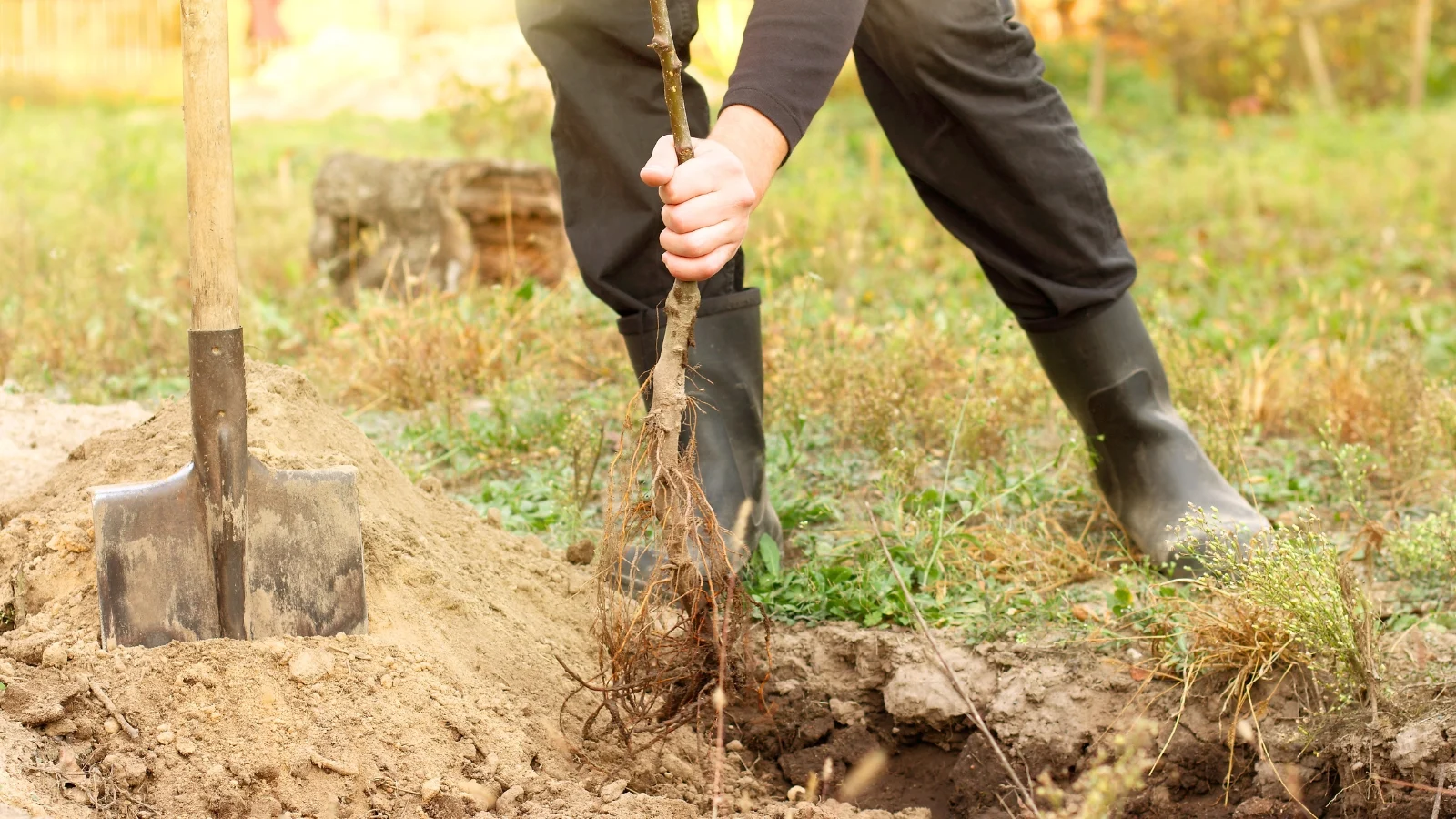
Bare root trees are often treated as the budget option, but that misses the real advantage. They are one of the clearest ways to establish healthy, productive fruit trees with less waste, less transplant shock and more control over how a garden develops. For many British gardeners, especially those working with limited space or mixed conditions, the better question is not whether to plant bare root, but which trees are worth planting first.
A leading UK fruit grower would usually begin with practicalities rather than fashion. The best bare root trees are not always the rarest or the most dramatic. They are the ones that settle quickly, crop reliably, suit British weather and repay the effort of planting with years of useful harvests. That makes variety choice more important than novelty.
The fruit trees specialists at https://www.fruit-trees.com/ nursery advise that gardeners who want to buy fruit trees should focus first on rootstock, pollination and site conditions rather than simply choosing the best-known names. In their view, bare root trees give home growers a strong start because the trees are lifted in season, easy to inspect before planting and generally adapt well when put into prepared ground during dormancy. That advice is especially relevant for gardeners who want long-term performance rather than a quick decorative effect.
This article looks at five bare root trees that are especially worth planting in the UK, not just because they are popular, but because each solves a different gardening problem. One is ideal for those who want a dependable apple without much fuss. One suits colder sites. One extends the season. One works well where space is tight. One offers a route into more varied fruit growing. Taken together, they show that the smartest planting plan is not built around trends, but around resilience, timing and how fruit is actually used at home.
Why bare root trees still make more sense than many container plants
Bare root season forces gardeners to think properly. Trees are bought and planted while dormant, usually between late autumn and early spring, when the structure is visible and the ground is often moist enough to support establishment. That timing alone gives bare root trees an edge. A dormant tree is not trying to support full leaf, flower or fruit while adapting to a new location. Its energy goes first into rooting, which is exactly what a newly planted tree needs.
There are also practical advantages that are easy to overlook. Bare root trees are lighter to handle, simpler to plant and easier to compare side by side. Without a pot hiding the base, the gardener can see more clearly how the tree has been grafted, whether the roots look balanced and whether the stem is straight and sound. This matters because early structure has a long influence on the future of the tree. A poor framework at planting often leads to years of correction.
In UK conditions, bare root planting also fits the natural rhythm of the garden. Winter and early spring are when many gardeners can prepare the ground, improve drainage, add organic matter and think about spacing before the rush of summer growth begins. That makes it far easier to plant with care. A tree set at the right depth, watered in well and mulched properly has every chance of moving into spring with momentum.
Another point rarely mentioned is that bare root trees encourage realistic expectations. They do not look finished when they arrive. They look like the start of something. For gardeners used to instant display, that can be a useful discipline. Fruit growing is cumulative. The best results come from thoughtful planting, measured pruning and a clear sense of what the tree is meant to do.
This is why the best bare root choices are not necessarily the most exciting on paper. They are the trees that match British gardens as they really are: often windy, sometimes wet, occasionally dry, and nearly always more constrained in size than the owner first imagines. A good tree in the wrong place will disappoint. A sensible tree in the right place will often outperform it for decades.
Tree one: a reliable dessert apple that earns its place year after year
If one bare root tree deserves to be called essential for British gardens, it is a dependable dessert apple. Not because apples are predictable, but because a well-chosen apple tree gives more return than almost any other fruit tree in a modest space. It can provide spring blossom, manageable pruning, useful shade and a crop that stores, cooks or eats fresh depending on the variety selected.
The most worthwhile apple for many gardeners is not the most famous supermarket type, but a variety known for reliability in local conditions. In large parts of the UK, that means choosing an apple with good disease resistance, especially to scab and mildew, and a flowering time that fits likely pollination partners nearby. A tree that crops steadily every year is more valuable than one that produces an exceptional harvest only now and then.
This is where the idea of “worth planting” becomes clearer. A bare root apple is worth planting when it offers consistency without demanding specialist skill. Varieties such as Scrumptious, Discovery or Saturn can suit home growers because they combine decent flavour with manageable behaviour. In many gardens, a grower is better served by a modestly vigorous tree that fruits regularly than by a classic variety that needs perfect care and a warmer site.
Rootstock matters as much as variety. On an M27 or M9 rootstock, an apple can work in a very small garden if support and watering are taken seriously. On M26 or MM106, the same type of fruit can become a much more substantial garden tree. The wrong rootstock is a common reason for later regret. People often choose the fruit first and discover too late that the tree is either too weak for the soil or too strong for the space.
A reliable dessert apple is also useful because it teaches the fundamentals of fruit growing. The pruning principles are clear, the growth pattern is familiar and the signs of health or stress are easy to read. For newer gardeners, that makes it a strong first investment. For experienced gardeners, it remains one of the best ways to secure useful harvests with relatively low drama. In practical terms, this is the tree that pays its rent.
Tree two: a cooker or dual-purpose apple for gardeners who actually use their crop
Many fruit trees are planted with good intentions and then underused because the harvest arrives all at once or does not fit everyday cooking. That is why a cooker or dual-purpose apple deserves a place among the top five. It answers a more realistic question: not what sounds attractive in a catalogue, but what will be used in the kitchen from August through winter.
A proper cooking apple remains one of the most useful trees for a British household. It can go into pies, crumbles, sauces, chutneys and freezer bags for later use. Even those who prefer sweet eating apples often find that a cooker earns its space more quickly because the crop is easy to process in quantity. A variety like Bramley is the obvious example, but it is not the only one worth considering. For smaller gardens, other cookers or dual-purpose options may be easier to manage.
The advantage of a dual-purpose variety is flexibility. In one season it may be sharper and best for cooking; later, or in a warmer year, it may also eat reasonably well fresh. That kind of adaptability matters in British weather, where fruit quality can vary with sunshine, rainfall and local shelter. A tree that performs across several uses is often a better long-term choice than one with a narrow ideal window.
There is also a structural reason to plant this type of tree. Cooking apples often encourage a more deliberate approach to harvest and storage. Gardeners are less likely to let the fruit drop and go to waste if they know it has a clear purpose. This changes how the tree is valued. It becomes part of the household system rather than an occasional luxury.
For anyone planning to buy fruit trees for a productive garden rather than a decorative one, a cooker or dual-purpose apple is often the point at which fruit growing starts to feel genuinely useful. It anchors the planting scheme in domestic reality. You are no longer choosing a tree only for blossom or novelty. You are planting something that can carry part of the autumn kitchen.
That practical quality matters because gardens are easier to maintain when they justify themselves in several ways. A cooking apple can do that. It can be handsome in spring, steady in growth and genuinely productive in autumn. Few trees cover so much ground.
Tree three: a pear for patience, structure and a longer-term reward
Pears are too often overlooked because they ask for patience. They are not always as quick to impress as apples, and they can be slightly more particular about site and pollination. Yet that is precisely why they are worth including in a list like this. A good bare root pear is one of the best long-term investments in a British garden, especially where the owner wants structure as well as fruit.
The strongest argument for planting a pear is that it brings a different kind of character. Pear trees have an upright elegance that works well in both formal and informal settings. They can be trained against a wall, grown as cordons, or allowed to develop into shapely free-standing trees on suitable rootstocks. In smaller gardens, that makes them especially valuable. Their habit often fits narrow or vertical spaces better than broader apple forms.
From a fruit-growing perspective, pears also diversify risk. If one crop suffers in a difficult season, another may still do well. This matters more than many gardeners expect. Building resilience into a small orchard is not only about disease resistance. It is also about having different flowering times, different harvest windows and different uses. Pears can help extend the season and reduce dependence on a single crop.
Conference remains popular for sound reasons. It is reliable, widely suited and can perform even where conditions are less than ideal. But the reason pears are worth planting goes beyond one variety. They reward careful siting, with sheltered sun and decent drainage, and they often respond well to thoughtful pruning. Once established, a good pear tree can become one of the most graceful and satisfying features in the garden.
There is another reason pears matter in the bare root season. Because they are often trained or planted with a clear design purpose, gardeners tend to think more carefully about placement from the start. That usually leads to better outcomes. A pear is seldom bought on impulse and shoved into the first available gap. It is planted with intention, which is exactly how fruit trees should be treated.
For gardeners willing to wait and manage expectations, pears offer some of the best returns in elegance and utility. They do not always shout for attention, but over time they can become the tree that people value most.
Tree four: a plum that crops well and suits the reality of British weather
Plums deserve more respect in home gardens because they answer a problem that apples and pears do not always solve: the desire for a generous, immediate-feeling crop from a tree that can still fit into an ordinary plot. A good plum can make a garden feel productive quite quickly, and the fruit has a short path from tree to table. That freshness is part of the point. Shop-bought plums are often disappointing because they are picked for transport rather than flavour. Home-grown plums, by contrast, can be properly ripe.
In the UK, the best plum choices are the ones that combine hardiness with reasonable self-fertility and dependable cropping. Victoria remains common because it is versatile and familiar, though it is not perfect in every setting. Other varieties may offer better flavour, improved resistance or more suitable timing depending on the site. What matters most is selecting a tree that matches the local climate and the gardener’s tolerance for thinning, pruning and occasional branch support when crops are heavy.
A plum is especially worth planting where the gardener wants a fruit tree that feels generous. Apples can be methodical and pears can be reserved, but plums often give a stronger sense of seasonal abundance. That can be encouraging in a mixed garden, where fruit growing competes with other demands and there is a real need for visible reward.
Plums also help broaden how the harvest is used. Fresh eating is the obvious route, but they can also be baked, bottled, frozen or turned into jam. In practical gardening terms, that matters because one of the main causes of disappointment is mismatch between crop and household habit. A fruit tree is only successful if the fruit is wanted.
There are, of course, caveats. Plums do not appreciate badly drained ground, and heavy pruning at the wrong time can increase the risk of disease. Their blossom can also be vulnerable in exposed or frosty sites. Yet these are manageable issues rather than reasons to avoid them. With sensible siting and variety choice, a bare root plum can become one of the most rewarding trees in the garden.
If the goal is not simply to own fruit trees but to enjoy using them, a plum has a strong case. It brings colour, speed, flavour and a sense of generosity that many gardens otherwise lack.
Tree five: a quince or medlar for gardeners who want one tree with real distinction
Every useful planting scheme benefits from one tree that broadens the range of the garden without becoming a burden. In this role, quince or medlar can be more worthwhile than another standard apple. They are not for every household, but for the right gardener they add something that common choices cannot: character rooted in utility, history and difference.
Quince is particularly strong if the aim is to grow fruit with fragrance and culinary value. It is not usually eaten raw, but when cooked it develops a distinctive perfume and richness that works in jelly, preserves, desserts and savoury dishes. The tree itself can be attractive, and because quince remains unusual in many gardens, it gives the grower something genuinely separate from the standard orchard mix. In small numbers, that can be enough to make the whole garden feel more considered.
Medlar has an even more unusual appeal. It is an old fruit tree, often grown as much for interest as for harvest, but that should not obscure its usefulness. Its fruits are traditionally eaten after bletting, when the flesh softens and the flavour deepens. That process alone changes the rhythm of the fruit garden. It introduces a slower, more reflective kind of harvest, one that suits gardeners interested in seasonality rather than volume alone.
Why include such a tree in a practical top five? Because not every valuable planting decision is about maximum yield. Some are about extending the cultural and culinary range of the garden. A quince or medlar can do that while still remaining manageable in scale. For gardeners who already have the basics covered, or who want a single talking point that also earns its space, this category makes sense.
There is also a useful lesson here. Fruit growing is not only about following the most familiar route. Once the basics of soil, drainage, pollination and pruning are understood, the garden can support choices that reflect taste rather than habit. A distinctive tree helps prevent the orchard area from becoming predictable.
The best bare root trees, then, are not simply the five most popular names. They are the five types that answer real needs: reliability, usefulness, structure, abundance and distinction. An apple for steady eating, a cooker for the kitchen, a pear for long-term elegance, a plum for generous cropping and a quince or medlar for individuality together make a far stronger planting strategy than five similar trees chosen on impulse.
That is the value of thinking like a grower. The aim is not just to plant trees, but to plant a system that works in British conditions and remains worth having as the years pass.
